A Digitalization Guide for Construction Firms: From Site to Sales in One Panel
A digitalization guide for construction firms. Unite projects, finance, progress payments and unit sales in one panel to clarify cash flow and end the paper-and-Excel chaos.

When we sat down with a contractor, there were three separate Excel files on the table, a stack of progress-payment folders, and a phone that wouldn't stop ringing. "To know how much I've collected on which unit, how much each subcontractor is owed, and what'll be left in the till this month, I have to call three different people," he said. The numbers didn't always add up; once, a progress-payment dispute with a subcontractor dragged on for days simply because the records were scattered. Construction is one of the largest industries in the country — yet often one of the furthest behind in digitalization.
But digitalizing in construction is necessary not because it's "trendy," but because it directly protects cash flow and profit. In this post we explain how a construction firm can unite its scattered processes — from project management to finance, from progress payments to unit sales — in a single panel, and what that earns the site, the office and the customer.
Why has digitalization lagged in construction?
Construction is, by its nature, work that happens on site, in the dust and dirt; for a long time the view that "software is desk work, it doesn't fit the site" prevailed. And because every project looks unique, standard software never quite fit the sector. As a result, many firms kept managing million-dollar projects with WhatsApp groups, scattered spreadsheets and folders.
But the picture has changed. Now everyone on site has a smartphone in hand; thanks to the cloud, the data in the office and the data on site can be identical in real time. The obstacle to digitalization isn't technology, it's habit. And the price of that habit is usually paid as a cash leak no one notices.
In construction, money is lost not from bad work but, more often, from bad tracking. You can't manage a cost you can't see.
1. Uniting scattered data in one panel
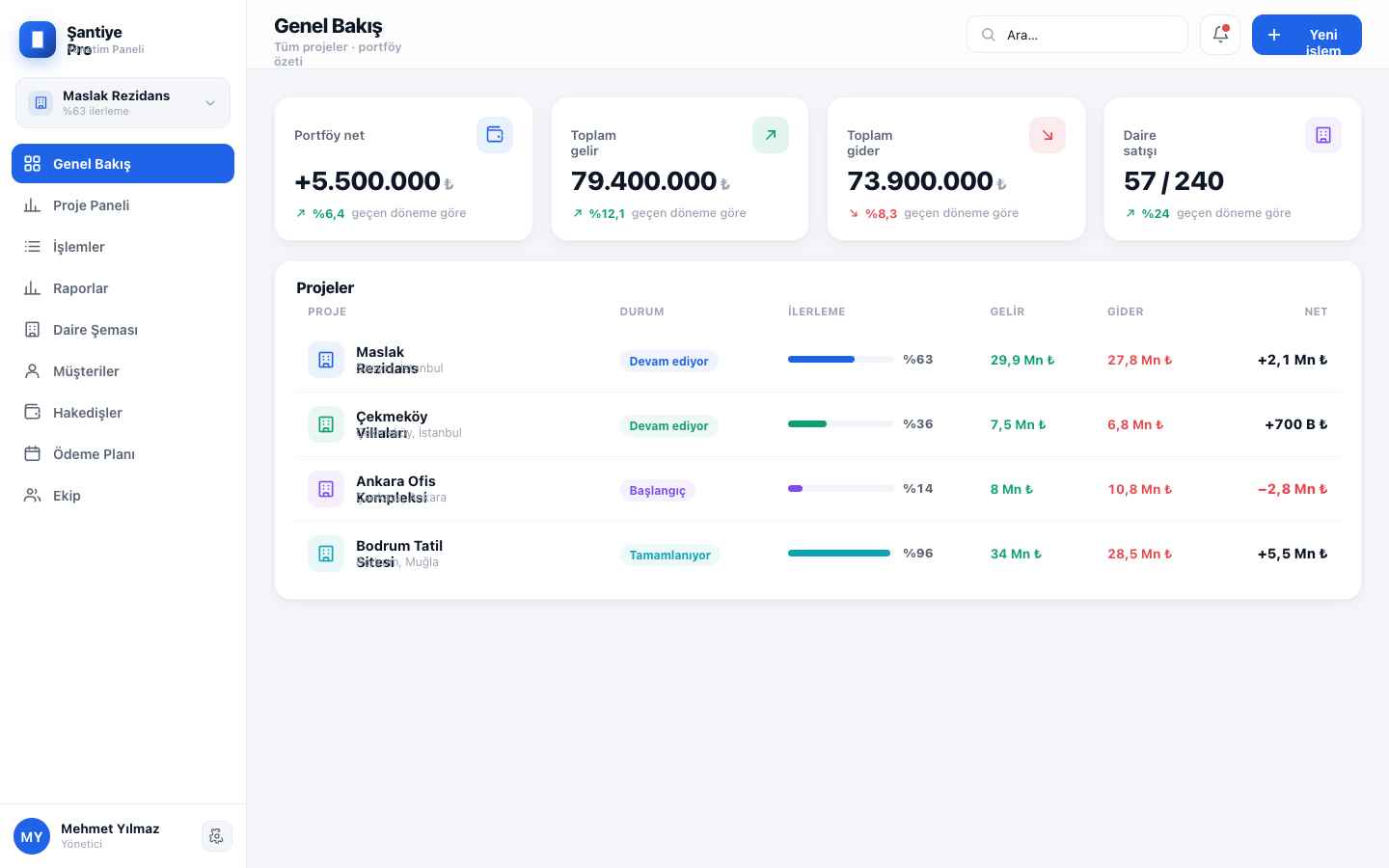
A construction firm has four core data sets, and they usually sit in four separate places: project progress, finance/cash flow, subcontractor progress payments, and unit/home sales. When these four are disconnected from each other, no one can give an instant answer to "where do we actually stand on this project?"
The first and most valuable step of digitalization is to unite these four sets in a single panel. Collections from unit sales should flow automatically into the finance table; a progress payment made to a subcontractor should reflect in the project's cost instantly. When you gather the data in one place, you don't need to call anyone to get a report — the panel already shows the live reality.

2. Clarifying finance and progress-payment tracking
In construction, the most critical question is always the same: "What will be left in the till at the end of this month?" To answer that clearly, income (unit collections) and expenses (subcontractor payments, materials, overheads) must be tracked in the same place, project by project. Tracking progress payments on paper invites both late payments and duplicate payments; both eat directly into profit.
In a digital system, every progress-payment record leaves a trail — to which subcontractor, for which work item, paid when. When a dispute arises, instead of digging through folders for days, you look back with one click. And for installment-based unit sales, automatically reminding you of collections coming due prevents forgotten payments. Making finance visible is the fastest-returning investment in construction.
3. Digitalizing unit sales
Home sales, at most construction firms, still run on "a spreadsheet and the salesperson's memory." Which unit is available, which is on hold, which is sold, where the buyer's installment plan stands — when this information is scattered, you both miss sales opportunities and fail to inspire confidence in the customer. Showing unit inventory live on a digital floor plan both speeds up and clarifies the sales process.
Add the project's own website on top, and the buyer can browse units online and leave an inquiry for the one they're interested in; the sales team, in turn, works with a ready list of leads. In other words, sales detach from the noise of the site and turn into a measurable process.
4. Ending the disconnect between site and office
The site is in the field, accounting is in the office, the sales office is somewhere else; that's the classic setup, and the information flow between them usually gets squeezed into phone calls and WhatsApp. When the site foreman enters a material request, hours or even days pass before it reflects in purchasing and then in cost. This delay lowers both the pace of the work and the accuracy of the data.
In a cloud-based panel, the site connects to the office in real time. Progress the foreman enters from their phone is visible instantly in the office; an approval given from the office drops to the site instantly. When there's a single source of truth, "I told you so" arguments give way to a recorded, traceable process.
5. Building trust with customers and investors
The unseen — but perhaps most valuable — return of digitalization is trust. A firm that can transparently show a buyer the project's progress and clearly present their collection plan looks far more corporate in that buyer's eyes. Likewise, being able to present an investor or a bank a tidy report of the project's financial standing makes financing processes easier.
A corporate website and a regularly updated project page match your firm's digital presence to the quality you show on site. You can review the solutions and examples we've built for construction firms on our construction sector page, and look at our custom software development approach for a setup tailored to you.
Digitalization in construction isn't about changing everything overnight; it's about starting where it hurts most — usually finance and progress-payment tracking — and moving the whole process into one panel step by step. If you want to unite projects, finance, progress payments and unit sales in one place, let's talk about how to start with Şantiye Pro and solutions tailored to you. Explore our construction solutions or get in touch directly.
Related Posts

Custom Software or Off-the-Shelf? A Decision Guide for Businesses
Custom software or an off-the-shelf package? Make the right call for your business with a clear comparison of hidden costs, vendor lock-in, integration and growth.

UI/UX Design That Turns Users into Customers: 8 Core Principles
Good UI/UX design turns visitors into customers. The 8 core principles of conversion-focused interface design: visual hierarchy, speed, trust, mobile-first and clear calls to action.

An Online Booking System Guide for Travel Agencies
An online booking guide for travel agencies. Sell more tours with 24/7 booking, capacity management, online payments and an SEO-friendly agency website.